News

Oakley’s “Playertopia” Campaign Is What Modern Athlete Marketing Looks Like
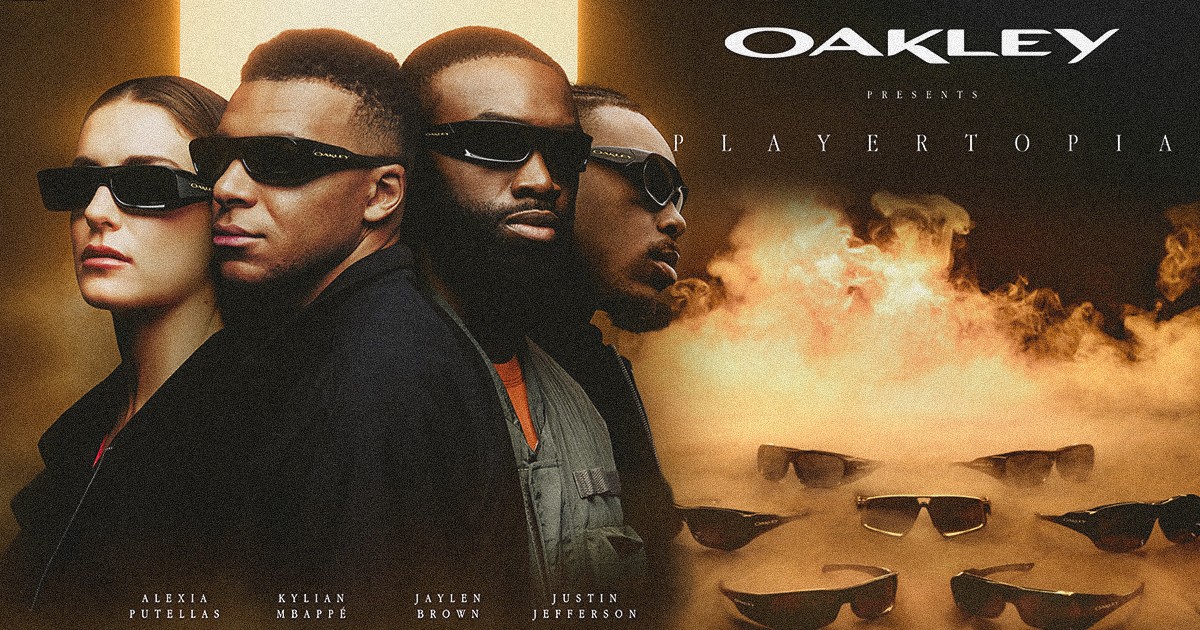
Oakley’s latest “Playertopia” campaign does not feel like a traditional sports endorsement rollout. It feels closer to a fashion universe built around athlete identity, culture, and crossover influence.
That distinction is exactly why the campaign stands out.
Instead of centering one sport or one type of athlete, Oakley brought together Kylian Mbappé, Jaylen Brown, Justin Jefferson, and Alexia Putellas — four athletes from completely different worlds who all carry strong individual identities beyond their sports.
The result feels less like a product launch and more like a statement about where athlete branding is headed.
Oakley Is Positioning Athletes Like Fashion Icons, Not Endorsers
The visual direction of the campaign says everything. Dark cinematic lighting, futuristic styling, luxury-fashion presentation, and signature eyewear collections transformed the athletes into cultural figures first and sports stars second.
That strategy matters because the modern sports audience no longer consumes athletes only through games.
Fans now follow athletes through tunnel fits, lifestyle content, fashion campaigns, music connections, and internet culture. Oakley clearly understands that shift and built “Playertopia” around athletes who already exist naturally inside those spaces.
Kylian Mbappé brings global football influence and mainstream celebrity status. Jaylen Brown brings fashion credibility, individuality, and creative control. Justin Jefferson represents one of the NFL’s most recognizable personalities, while Alexia Putellas adds global women’s football visibility and crossover appeal.
Together, the lineup allows Oakley to dominate multiple cultural conversations simultaneously.
Jaylen Brown’s Role Signals a Bigger Shift in Athlete Partnerships
One of the most interesting parts of the campaign is how much creative ownership Oakley gave Jaylen Brown.
Brown did not simply wear products for the campaign. He co-designed pieces within the collection, including apparel and his signature eyewear line.
That reflects a much larger shift happening across athlete marketing.
The biggest athletes increasingly want equity, creative input, storytelling influence, and long-term brand building instead of standard endorsement structures. Brown has already shown that mentality throughout his career, famously prioritizing ownership and personal brand development over traditional sponsorship volume.
Oakley leaning into that approach makes the partnership feel far more authentic and culturally relevant.
Kylian Mbappé Continues Building One of the Biggest Global Athlete Brands
The campaign also arrives at a critical moment for Kylian Mbappé’s overall brand trajectory.
Mbappé already operates at a level that extends far beyond football. Between Real Madrid, the French national team, fashion partnerships, and global campaigns, he has become one of the most commercially valuable athletes in the world.
Oakley embedded personal storytelling details directly into his signature eyewear, including references to Bondy, the Paris suburb where he grew up.
That type of storytelling matters because it transforms products into extensions of athlete identity rather than generic branded merchandise.
With the 2026 FIFA World Cup approaching — and the tournament returning to the United States for the first time since 1994 — Mbappé’s visibility could reach another level entirely over the next year.
Oakley positioning itself alongside him before that moment feels extremely intentional.
“Playertopia” Feels Bigger Than Sports
The smartest part of the campaign may be that it barely feels sports-specific at all.
Oakley is no longer marketing only to performance consumers. The brand is positioning itself at the intersection of sports, fashion, music, internet culture, and futuristic design.
That approach mirrors where athlete influence itself is going.
The most valuable athletes today are not simply performers. They are becoming full-scale media brands capable of influencing style, culture, and consumer behavior globally.
“Playertopia” works because Oakley understood that before most brands do
GARRETT ROSPARS
Here are some related blog posts you might be interested in reading